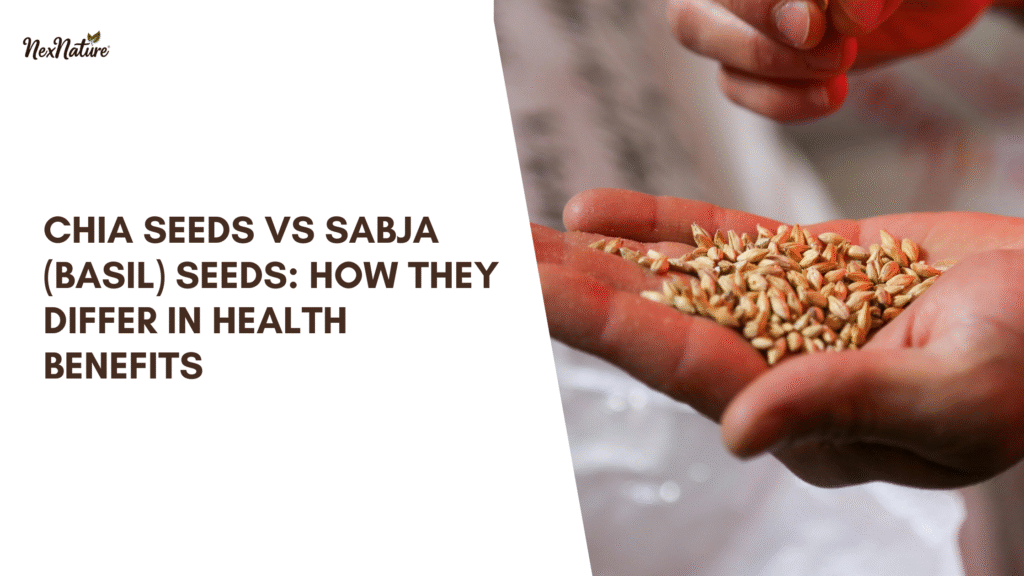
The quick answer is: opt for omega-3, heart health and protein with chia seeds. Opt for sabja seeds as an aid to digestion, cooling, relieving the acidity and for its palatability.
For weight loss? Both work. For gut health? Both help. It’s not that one is better, it is that each is doing something that the other is not. But after you know that the decision is rather straightforward.
Are Chia and Sabja the Same Thing?
The most prevalent source of confusion is this, and it is quite understandable. Both seeds also swell in water, both have a similar appearance in drinks, and both are sold in health food stores as a ‘superfood’.
Though they are from different plants.
| Factor | Chia Seeds | Sabja Seeds |
|---|---|---|
| Plant source | Salvia hispanica | Sweet basil |
| Soaking time | 15 to 30 minutes | 5 to 10 minutes |
| Omega-3 content | High | Very low |
| Protein | Higher | Lower |
| Cooling effect | Mild | Strong |
| Cost in India | Higher | Significantly lower |
| Traditional use | Modern health foods | Ayurveda, summer drinks |
Sabja seeds expand in mere minutes — simply toss them in water and they’re ready to go. Time passes slowly with Chia. The omega-3 fatty acids found in chia are substantial, and sabja has a strong cooling effect, but it’s also an affordable option for most homes to use every day.
Which Is Better for Weight Loss?
Truthfully, both of the above are beneficial — and neither single one can do the work for you.
The mechanism works the same for both seeds, soluble fiber carries water and swells in your stomach which slows the digestion process. This means that you’ll feel satiated for longer and be able to eat more without feeling deprived.
Choose chia if you:
- Have a high protein diet and are looking for additional nutrients
- Choose smoothies, overnight oats, or yogurt bowls!
- Hate having to get up and drink fluids again throughout the day?Desire sustained fullness and comfort throughout the day?
Choose sabja if you:
- Eat and experience bloating or acidity along with weight problems
- Enjoy traditional Indian beverages routinely
- The perfect way to get an inexpensive daily fibre kick!
No fat is burned during the seed phase. They will help you with your diet. Keep expectations realistic.
Which Is Better for Gut Health?
Both contain soluble fibre which helps to maintain the health of the gut, but in a slightly different way.
Chia seeds promote bowel regularity, may help to soften the stool and are beneficial for those who are seeking more regular fiber in their diet. Sabja seeds give thicker, faster gel that is soothing to acidity and bloating, hence being a part of Ayurvedic medicine from a long time.
Sabja is for more people willing to help if they experience frequent acidity, heartburn or a hot gut feeling would be the better daily option. If you are just worried about irregular digestion and/or regularizing fiber consumption, then chia better fits into most meals.
In the summer season in India, there is little doubt about the cooling effect. A glass of rose sherbert or buttermilk soaked sabja is not only traditional, it’s also a remedy for many to calm the stomach.
Which Is Better for Heart Health?
This one is not close. Chia wins.
Chia seeds are an excellent source of ALA, a plant-based omega-3 fatty acid which directly supports cardiovascular health. Chia consumption has been found to have a small effect on blood pressure, especially in people with diabetes or hypertension. Chia is one of the easiest-to-use plant-based sources of omega-3 that available for vegetarians who don’t consume fish.
Sabja seeds are not devoid of antioxidants and fibre, which also play a role in heart health. But they don’t offer the same omega-3 benefit that makes chia a useful food for people who are cholesterol or heart health focused.
Sabja seeds are not devoid of antioxidants and fibre, which also play a role in heart health. But they don’t offer the same omega-3 benefit that makes chia a useful food for people who are cholesterol or heart health focused.
Daily Nutrition: Which Gives You More Per Serving?
This is where personal diet and budget comes in.
Chia seeds are richer in protein, contain significant amounts of omega-3s and provide an adequate amount of minerals like calcium and magnesium. People who are on a vegetarian and/or plant-based diet have to make every meal count and find that they are indeed healthy and effective.
Sabja seeds offer good fiber and a certain amount of iron and calcium, don’t have the highest protein or higher fat content. What they do have is accessibility. Sabja seeds are also commonly sold in India for significantly less than imported chia seeds. If you’re looking to incorporate a daily dose of fiber into your diet that you plan to stick with over time, then the less expensive sabja is a good deterrent.
Use chia daily if you:
- Need plant-based omega-3
- Are an athlete or follow a high-protein diet
- Eat nutritious foods, like an egg, as a part of your breakfast.
Use sabja daily if you:
- Provide hemorrhoids treatment at low cost and in a consistent manner
- Adopt the traditional Indian eating habits.
- Looking for a product that can be used by the whole family, and without harm?
How to Actually Use Each Seed
Chia Seeds
Serving size: 1 to 2 tablespoons
Soaking time: 20 to 30 minutes minimum
- Soak in water, milk, or plant milk overnight for chia pudding
- Stir into oatmeal or yogurt
- Blend into smoothies
- Add to homemade energy bars or muffin batter
Never eat them without any water. The chia seeds swell in the gut, leading to discomfort and potentially blockage, particularly for people who have a restricted esophagus or swallowing problems.
Sabja Seeds
Serving size: 1 to 2 teaspoons
Soaking time: 5 to 10 minutes
- Add to falooda, rose milk, or lemon water
- Mix into buttermilk or nimbu pani
- Stir into summer fruit drinks
- Add to chaas or sherbets
Same rule applies — always soak first.
Common Mistakes People Make
Transitioning to chunky text.Placing the head straight to a large font. If the gut isn’t accustomed to high fiber, you can get cramping, gas and bloating when you add several tablespoons of each overnight. Add one teaspoon and slowly work up over the course of several weeks.
Infecting the diet with seeds. Both seeds are good additions to a healthy eating plan. They do not replace a healthy diet or awareness of calorie intake.
Ignoring water intake. Fiber requires water to function. You should increase your intake of seeds but not the water intake, or you could make constipation worse.
If they can be substituted in food recipes. They taste differently, absorb water at different rates and produce different textures. If you use sabja to make chia pudding, you won’t have the same experience and if you add sabja to a falooda, it will not be the same as chia.
Who Should Be Careful
Both seeds are safe in the quantities consumed by most adults. However, do talk to a doctor before you:
- Use anti-coagulant drugs (omega-3 may apply in case of chia)
- Have a swallowing problem or a history of esophageal problems
- Control chronic digestive disorders such as Crohn’s or IBS
- Concerned about kidney stones and need to keep track of oxalate intake
For sensitive digestion, it is advisable to go slowly and start with little.
The Decision You Actually Came For
Choose chia seeds if you want:
- Heart health and omega-3 support
- More protein per serving
- Breakfast and smoothie nutrition
- Plant-based omega-3 for a vegetarian diet
Choose sabja seeds if you want:
- Cooling and acidity relief, especially in summer
- Daily digestive support
- Faster soaking and easier preparation
- A sustainable, affordable daily habit
Use both if you want:
- Broad nutritional coverage without relying on a single source
A good practice that works well: sabja with your lemon juice or summer beverages, or chia in your morning meal. The cooling effect comes from one, and the omega-3 and protein from the other.
Frequently Asked Questions
Can chia and sabja seeds be substituted for each other?
Not really. They soak at different rates, taste different, and have different nutrient profiles. Use them based on what you need rather than swapping one for the other.
Which is better for diabetes?
Both provide fiber that slows glucose absorption. Chia’s omega-3 content offers additional cardiovascular support, which matters for many people managing diabetes.
Is there a side effect from eating too many seeds?
Yes. Excess fiber from either seed can cause gas, bloating, and digestive discomfort. Increase intake gradually and stay well hydrated.
Why are chia seeds so much more expensive?
Chia is largely imported in India. Sabja is locally grown and widely available, which keeps the price significantly lower.
Can children eat these seeds?
In small amounts, yes. Always ensure seeds are properly soaked before giving them to children, and start with very small quantities to avoid digestive issues.
Final Thoughts
There’s no “better” chia or sabja. The best option will depend on the kind of body that you require at this time and one which you are able to truly consume daily.
When you want to help keep your heart healthy and need to get your omega-3 plant based, make chia a regular part of your day. Sabja is the Seed when you want the digestive support at an affordable price that is easy and natural cooling.
And, if your wallet permits, a bit of both isn’t a bad idea at all.