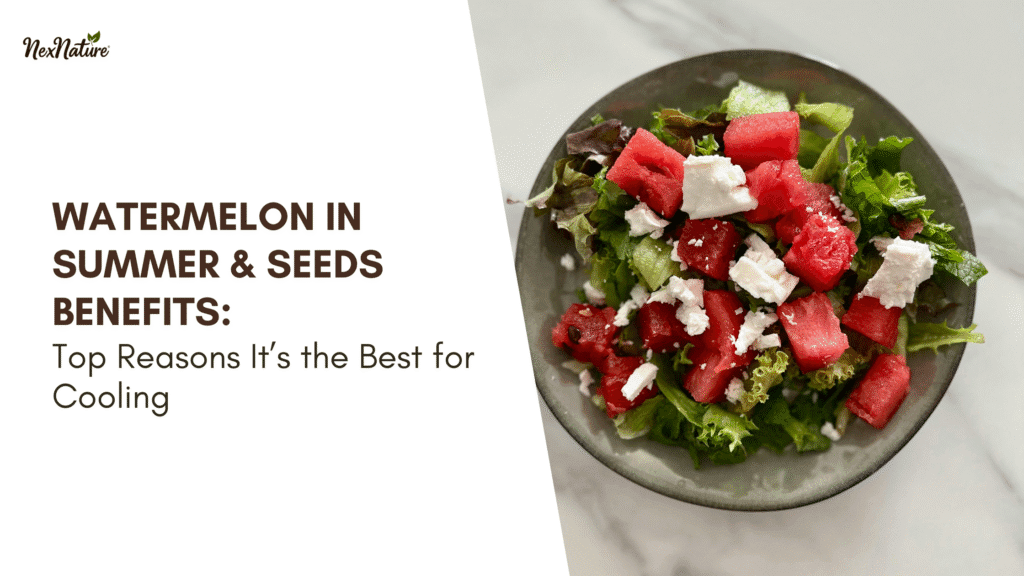
It’s high summer and stepping outside feels like the sun is an energy vampire. It’s hot, you sweat, you feel thirsty, you get tired. But then you eat some icy cold watermelon. Instantly refreshing, right?
That is why watermelon in summer is more than a fruit. To many it is a lifeline.
But here’s what most people do not know. As they relish the delicious red flesh, they casually discard the seeds, not realising they are discarding one of the best nutritional summer treats. This article is about both because it’s important to know how it fits into your summer diet.
Why Watermelon Is the Best Cooling Fruit in Summer
When it comes to watermelons and the summer months, it all goes back to the fact that watermelons are 91 to 92 percent water. This is more than just refreshing, it is useful. It helps keep you cool, stops you getting dehydrated, and allows you to cool down fast without any of the chemicals and artificial sweetener of commercial beverages. Watermelon is low in calories and high in water, making it a filling, satisfying food without the excess calories of heavy summer treats.
The best part about watermelon is that it’s thirst quenching, nutritious, and convenient. You don’t have to wash it, cook it or think about it. You slice and eat it, and feel refreshed in moments. For an exhausting time of year, that’s a lot to love.
Watermelon for Hydration and Heat Relief
Watermelon shines in the water department. Water is essential for regulating body temperature, aiding digestion, facilitating circulation and keeping you alert and focused. When you perspire in summer, you lose more than water. You lose electrolytes, and watermelon helps replace them, as it is high in potassium.
Eating watermelon in summer is best in the morning to boost your water intake or in the afternoon when you may feel fatigued. That’s easier with an empty stomach in the morning for quicker absorption and a purer energy boost. If you suffer from low energy in the afternoons in summer, changing your midday snack to watermelon can help. There is a reason for this. Dehydration is the leading cause of summer fatigue, and that is where watermelon helps.
Nutritional Value of Watermelon
So watermelon may seem plain, but it’s anything but. It has vitamin C to strengthen immunity, vitamin A to improve skin and vision, lycopene which is a potent antioxidant and has been shown to protect the heart, citrulline which enhances blood flow and potassium which helps muscles contract. Lycopene is of particular interest. This chemical gives watermelon its pink colour and has been shown to have anti-inflammatory and preventative health properties. Nutritional studies have shown that foods containing lycopene can lower cholesterol and blood pressure, making watermelon an unsung hero of more than just replenishing water.
Top Health Benefits of Watermelon
There’s more to the health benefits of watermelon than meets the eye. The amino acid citrulline relaxes blood vessels and can lower blood pressure. Vitamin C helps produce collagen, which helps your skin stay healthy, despite the damage that can be caused by the sun. The water and fibre content helps digestion and stops that post-lunch food baby. If you’re watching your weight this summer, watermelon is one of the few things that tastes good and won’t make you fat.
It’s also great for post-workout. The amino acid citrulline has also been shown to improve recovery from muscle soreness, making watermelon a great choice for after workouts in summer.
Watermelon Seeds Benefits: Don’t Throw Them Away
But now for the real secret. You can see that the watermelon seeds benefits are real, and are largely overlooked. The tiny white or black seeds in your fruit are packed with magnesium, iron, zinc, healthy fats and plant protein. Nutritional analysis shows that watermelon seeds are packed with nutrients and minerals such as iron and magnesium that help with metabolism, immunity and heart health.
Magnesium is involved in more than 300 reactions in the body. Iron helps transport oxygen in the bloodstream. Zinc boosts the immune system. Healthy fats support heart function. Watermelon seeds are a readily accessible source of plant protein for vegetarians, in particular. So the seeds are not just “growing inside the fruit” and the nutritional evidence proves this to be true.
How to Eat Watermelon Seeds the Right Way
It’s fine to eat it raw, but not the best idea. It’s hard to absorb all the nutrients of the seeds if you eat them whole. It’s best to roast them. Rinse the seeds, dry them well and roast on low with a little salt. You will have a crunchy and delicious treat that’s far from an accident. Alternatively, you can grind the dried seeds and mix them with smoothies, oats or salads. In both cases, you’re better able to absorb the nutrients when the seeds are cooked.
Side Effects and Who Should Be Careful
Even with all-natural watermelon, moderation is key. Watermelons have sugars and fructose in them, which can lead to tummy upset if you eat too much, especially if you have a sensitive tummy or IBS. For those who suffer from diabetes, the glycemic index of watermelon requires you eat in moderation. You can eat two or three slices. Having half a watermelon every day can be too much. Eating in moderation means you get all the benefits.
Frequently Asked Questions
Is watermelon good in summer? Yes. Watermelon in summer supports hydration, cooling, digestion, and natural energy without heavy calories.
Can we eat watermelon seeds? Yes, and watermelon seeds benefits include magnesium, iron, zinc, and plant-based protein. Roasting them improves both taste and absorption.
Does watermelon reduce body heat? Yes, due to its high water content and natural electrolytes that support temperature regulation.
Is watermelon good for weight loss? Yes. It is low in calories, high in volume, and keeps you full longer, making it an ideal summer snack for weight management.
Can eating too much watermelon cause issues? Yes, in excess it can cause digestive discomfort due to fructose. Moderation is key.
Final Verdict
If summer had a mascot, it would be watermelon. From hydration and heart health to skin support and workout recovery, watermelon in summer delivers far more than most people realize. And now that you understand the real value of watermelon seeds benefits, there is very little reason to keep throwing them away.
Real summer nutrition does not have to be complicated. Sometimes it is just about using the whole fruit instead of half of it.