
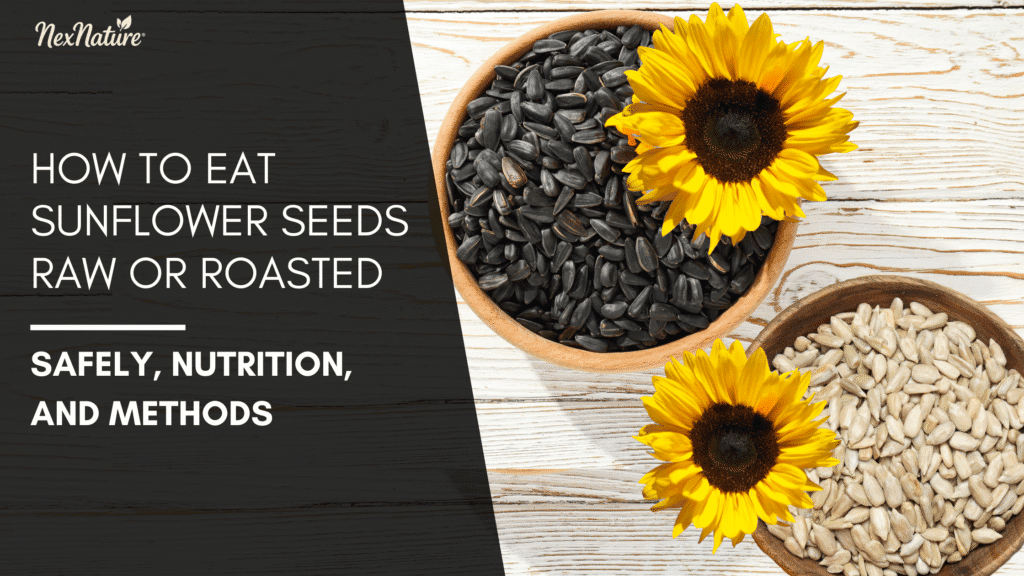
How to Eat Sunflower Seeds Raw or Roasted: Safely, Nutrition, and Methods
Introduction Did you ever wonder how to eat sunflower seeds either raw or roasted correctly, you are in the right place. These are nutrient rich seeds that so much more than a snack at a baseball stadium, they are delicious, versatile, and healthy when cooked properly. We will discuss all the aspects of nutrition and safety, shelling techniques, roasting methods, and innovative recipes ideas in this ultimate guide. It doesn’t matter whether you are new to sunflower seeds or need to learn more about them, you will find useful tips and professional skills on making the most of these seeds safely and delicious. Understanding Sunflower Seeds: What You Need to Know We should know what we are dealing with before we dive into how to eat sunflower seeds when raw or roasted seeds. Sunflower seeds are offered in two types: In-shell (also known as shell-on) seeds must be cracked to access the edible kernel within. These are typical snacks and contain entertainment value as well as nutritional value. Hulled seeds (kernels) are already shelled and are ready to be eaten or used in recipes. They are convenient yet will be having less shelf life because of the exposed oils. You will also find varieties in them – striped seeds (they are eaten as a snack) and black oil seeds (they are used as bird feed, but also you can eat them). Nutritional variation is very small, although, black oil seeds are more likely to have a higher fat level. Nutritional Profile and Health Benefits Sunflower seeds contain large nutritional value in their tiny size. One hundred grams of dried kernels will have around 584 calories, 21 percent protein, and good unsaturated fats and linoleic and oleic acids. The seed is very nutritious in terms of vitamin E (a strong antioxidant), B vitamins, magnesium, selenium and zinc. The nutrients can be helpful in heart health, anti-inflammatory, and immune functioning. Sunflower seeds are highly valuable in vegetarians and vegans due to the high protein level, and cardiovascular and brain health can be maintained by the healthy fats. Safety Considerations and Potential Risks To know how to safely eat sunflower seeds whether raw or roasted, one must be aware of the possible concerns: Heavy metals: There are studies that have found the build-up of cadmium in sunflower seeds. The levels are usually low, but it is prudent to be moderate. Allergic reactions: Rare in comparison with tree nuts, some individuals can be allergic to sunflower seeds, particularly individuals with ragweed allergies. Oxidation and rancidity: During storage or high-heat food processing, the unsaturated fats can oxidize, producing off-flavours and potentially harmful compounds. Dietary issues: Shell ingestion can lead to irritation or choking especially among children. It is good to take off shells before eating. Caloric density: Weighing almost 600 calories per 100 grams, portion control is important in weight regulation. Raw vs. Roasted: Comparing Your Options When making a choice between eating raw verses roasting sunflower seeds, the trade-offs are: Raw Sunflower Seeds Benefits Roasted Sunflower Seeds Advantages Studies have indicated that moderate roasting (120-140degC) may in fact enhance the quantity of certain desirable compounds and reduce losses in the nutrients. Nonetheless, roasting (at high temperature) can destroy certain antioxidants and generate unwanted compounds. How to Eat Raw Sunflower Seeds It is easy to enjoy raw sunflower seeds once you are aware of the fundamentals: Direct snacking: Directly eat hulled kernels out of the package as a quick and healthy snack. Addition of smoothies: Kernels are raw, so add it to smoothies to provide additional protein and healthy fat. Salad topper: Sprinkle on salads, yogurt or oatmeal to provide additional crunch and nutrition. Homemade seed butter: Some recipes using raw kernels in a food processor can make a peanut butter substitute, which is free of nuts. Soaking: There are those who choose to soak raw seeds overnight, in order to make them soft and possibly more digestible. How to Roast Sunflower Seeds: Step-by-Step Methods To roast sunflower seeds correctly, it is important to know how to do it in order to get the best taste: Oven Method Stovetop Method Air Fryer Method Shelling Techniques for Shell-On Seeds Whenever you have shell-on seeds, it is always helpful to know tricks to shell sunflower seeds faster and without frustration: Teeth – The standard technique – bite through the shell, then use your tongue to pull out the kernel. Rolling pin method: Seed placed in between clean towel and rolled until many shells have been cracked. Freeze-thenaw technique: Quickly freeze seed and leave to thaw – shells are more apt to crack. Soaking method: Temporary softening of shells may be induced by brief soaking, increasing their crack resistance. Storage and Shelf Life To store properly to preserve quality and to avoid rancidity: Creative Ways to Use Sunflower Seeds In addition to the snacking, the sunflower seeds are versatile: Baking ingredient: Use in breads, muffins and granola to add additional nutrition and texture. Seed Coating: To make a crunchy coating on fish or chicken, crush and roast the seeds. Homemade trail mix: Add in dried fruits and additional seeds to have a snack that goes everywhere. Salad improvement: Sprinkle salads to add in protein and healthy fats. Energy balls: Combine dates and other ingredients to create no bake energy balls. Recommended Daily Intake and Portion Control An average 1-ounce (28 grams or approximately 1/4 cup of kernels) portion of sunflower seeds has approximately 100 grams of omega-3 fatty acids. This is very nutritious and yet contains affordable calories. The recommended 1-2 portions per day would suit most individuals to a sensible diet. The consumers of sodium should consume unadulterated forms and the consumers with certain health conditions should seek the guidance of their healthcare practitioner concerning the right dosage. FAQs Can you eat sunflower seed shells? No, you should remove and discard the shells. They’re fibrous, difficult to digest, and can cause throat irritation or choking. Are raw sunflower seeds safe to eat daily? Yes, in appropriate
How to Eat Sunflower Seeds Raw or Roasted: Safely, Nutrition, and Methods Read More »